Release time:2026-03-07 08:36:34 POP: Source:
|
by Wang Xiaotong BEIJING, Mar 5 (China Economic Net) – China's "Two Sessions" convened on March 4. Wu De, President of Sichuan Agricultural University (SAU) and Deputy to the 14th National People's Congress, underscored the importance of enhancing international agricultural cooperation for global food security and sustainable agricultural development in an exclusive interview with CEN.
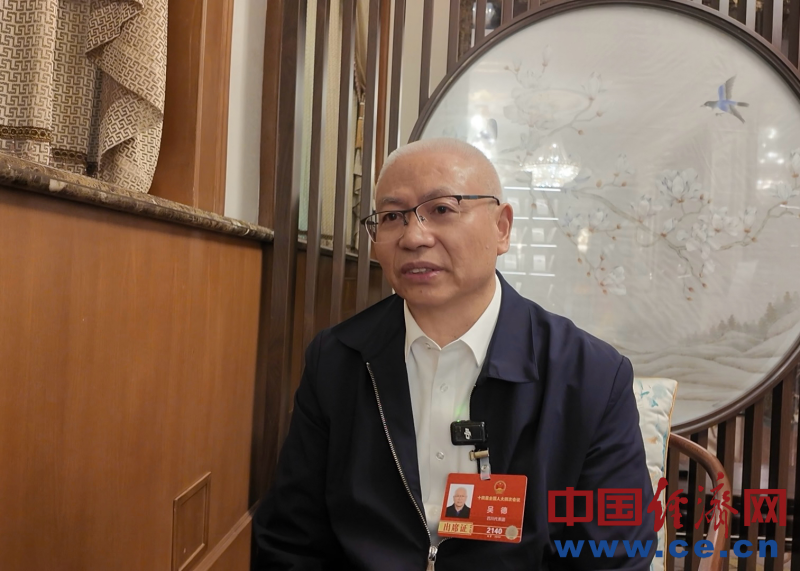
Wu De, President of Sichuan Agricultural University (SAU) and Deputy to the 14th National People's Congress is in an interview with CEN. [Photo/Wang Xiaotong] Wu De noted that many agricultural technologies developed by SAU have been successfully applied overseas to help boost local agricultural development. The maize-soybean intercropping technology, for example, has been piloted in Pakistan with promising results. Looking ahead, the university will focus on two major areas for global outreach. First, SAU will promote key achievements in biological breeding overseas, including improved varieties of corn, wheat, and quality breeds for specialized farming. For instance, leveraging Sichuan's large-scale rabbit industry, the university is cooperating with partners in Kazakhstan on high-quality rabbit breeds, while further strengthening seed industry cooperation with countries along the Belt and Road. The university will also expand international cooperation in agricultural infrastructure and food processing. SAU has already established in-depth partnerships with universities in New Zealand, Australia, Italy, and other countries in this field. It will continue to share adaptable technologies with Belt and Road partners to support their agricultural modernization. China-U.S. agricultural cooperation was also addressed by Wu De. SAU has maintained close collaboration with U.S. institutions in forage breeding and the pig industry. In his view, the United States boasts strong advantages in pig genetic resources, and SAU has conducted exchanges in nutrition, breeding, and feeding technologies with its U.S. partners. In addition, some forage varieties developed by SAU have been registered and commercialized in the U.S. market. "Supported by extensive academic exchanges, China and the U.S. enjoy a solid foundation for agricultural cooperation," he noted, adding that opportunities for future bilateral collaboration lie in food processing, dairy production and agricultural economic management.
|


 Telegram